more:science

MO:BOT
The backbone for 3D biology

Translate promising models into methods you can control, visualize, scale, and document.
Reproducibility
Efficiency
Reliability
Scalability
Accuracy
Flexibility

Control

AUTOMATED, PRECISE EXECUTION

MO:BOT runs critical 3D handling steps with repeatable parameters.
MO:DULES add heating, cooling, tilting, shaking, imaging, and gripping.
No-code protocol logic translates the method into a consistent,
executable process, reducing operator-dependent variation.

Visualize

IN-PROCESS IMAGING AND QC

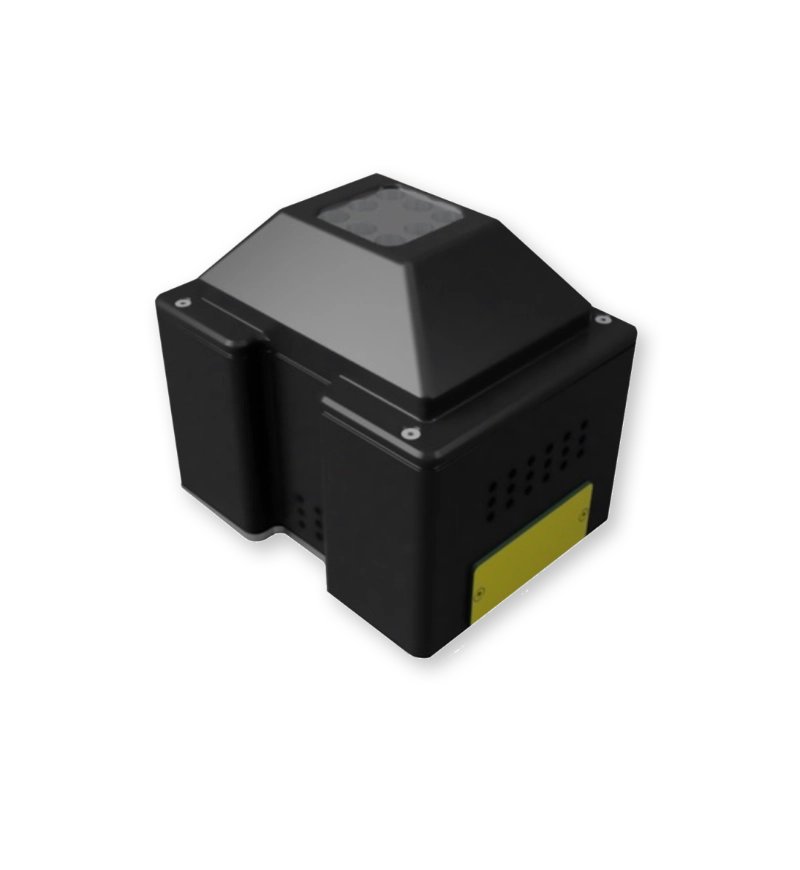
MO:CROSCOPE captures per-well autofocus brightfield images at defined checkpoints. On-device analytics quantify morphology and flag outliers, helping teams understand whether the biology is on track and course-correct when needed.

Scale

Single tubes
6 to 96-well SBS
CODIFY THE METHOD. EXPAND CAPACITY

Support single tubes through 6- to 96-well SBS
formats. Scheduling, walkaway execution, and
reusable protocols expand capacity and support
consistent transfer across experiments, users,
and sites.

Document

TRACEABILITY IN EVERY RUN

Link protocol execution, imaging, QC, data, and run history into a
traceable record. Reference protocols preserve method knowledge,
while structured records support downstream analysis, study
documentation, and audit requirements.

MO:BOT APPLICATIONS

Four enablers underneath the pillars

MO:BOT combines automated handling, modular MO:DULES, integrated MO:CROSCOPE imaging, and connected software to execute, monitor, and document 3D workflows.

MO:BOT
MO:DULES
MO:CROSCOPE
SOFTWARE

THE 3D WORKFLOW

01 Seed
02 ECM domes
03 Medium exchange
04 Sample collection
05 Image
06 In-process QC
07 Compound screening
08 Endpoint assays

Supported and documented by MO:BOT

MO:BOT SOFTWARE

From protocol to run record

Experiment setup takes under 15 min

MO:DULES

Reconfigure the deck for the workflow

Modules are recognized automatically: no cables, no scripting.
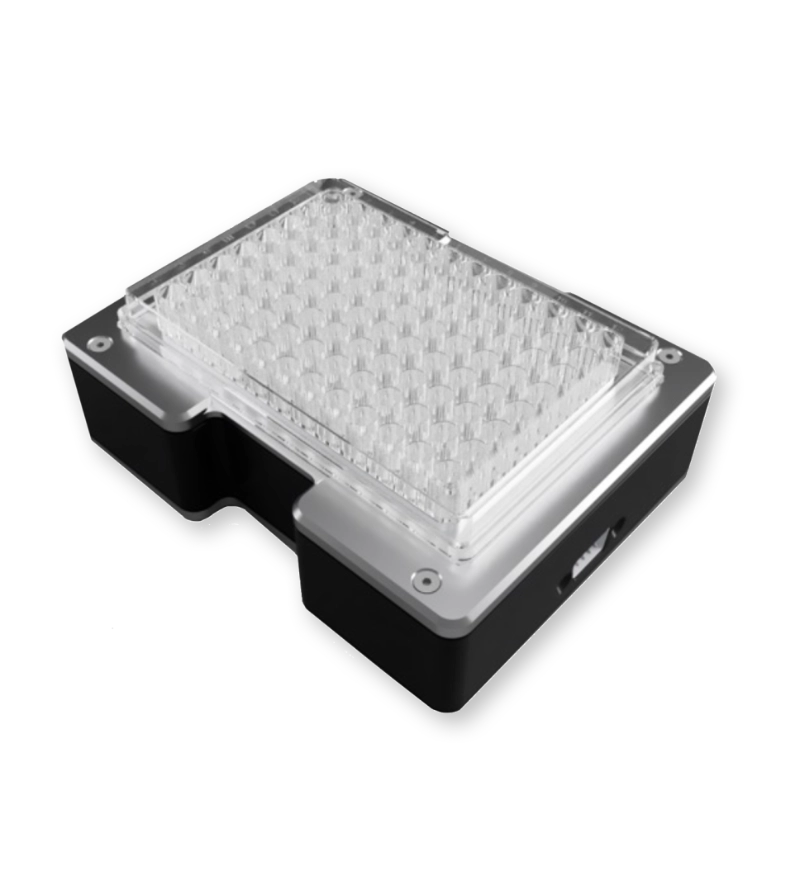
MO:HEAT heating module, supporting controlled sample incubation up to 40ºC in the automation platform.
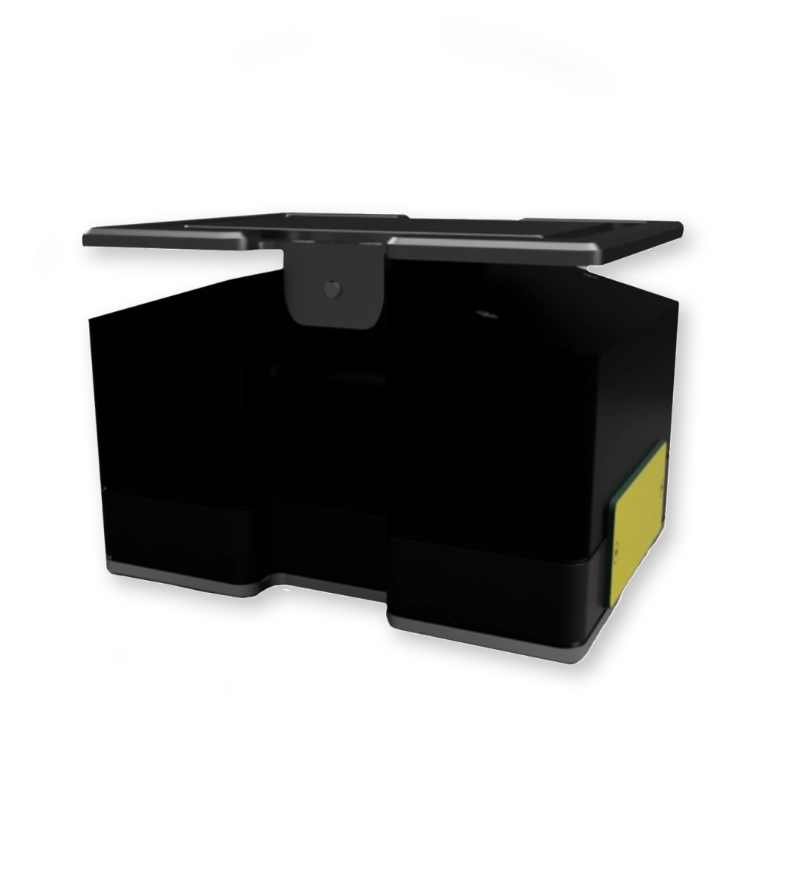
MO:COOL cooling module, maintaining temperatures down to -5ºC for sensitive cell culture experiments.
MO:SHAKE shaking module ensuring rigorous mixing up to 1,000rpm for homogenous reactions.
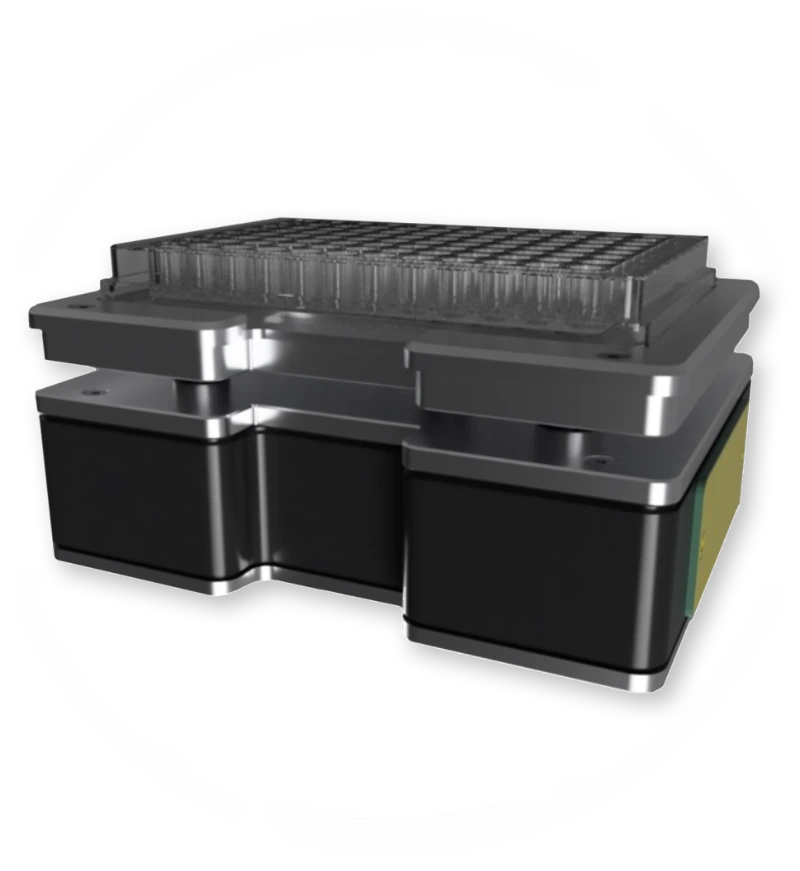
MO:TILT tilting module facilitating gentle mixing and enhanced medium exchange for cell cultures.
MO:CROSCOPE

In-process brightfield imaging and morphology
analysis at defined checkpoints.

MO:HEAT
MO:HEAT heating module, supporting controlled sample incubation up to 40ºC in the automation platform.

Temperature control up to 40ºC

MO:COOL
MO:COOL cooling module, maintaining temperatures down to -5ºC for sensitive cell culture experiments.

Cooling down to -5ºC

MO:SHAKE
MO:SHAKE shaking module ensuring rigorous mixing up to 1,000rpm for homogenous reactions.

Shaking up to 1,000 rpm

MO:TILT
MO:TILT tilting module facilitating gentle mixing and enhanced medium exchange for cell cultures.

Gentle mixing and medium exchange

Open by design. Use your own protocols, labware, and reagents.
The only proprietary consumable is the MO:BOT tip.

Specifications

Deck capacity

12 SLAS / SBS-format plates

Environment

Controlled, sterile S2 environment; Class II biosafety

Form factor

Benchtop, fits a standard laboratory bench.

Tools

  • Single-channel positive-displacement pipette (50 µL – 1 mL).
  • Multichannel pipette.
  • Gripper for plate transport and lid removal.

Formats

Single tubes; 6- to 96-well SBS plates.

ROUTINE CULTURE STEPS        : :         ROUTINE QC       : :        DRUG SCREENING       : :        TOXICITY AND SAFETY READOUTS (DILI, NEPHROTOXICITY, CARDIOTOXICITY)       : :         PHARMACOLOGY       : :        PRECISION-MEDICINE ASSAYS       : :         ROUTINE CULTURE STEPS        : :         ROUTINE QC       : :        DRUG SCREENING       : :        TOXICITY AND SAFETY READOUTS (DILI, NEPHROTOXICITY, CARDIOTOXICITY)       : :         PHARMACOLOGY       : :        PRECISION-MEDICINE ASSAYS       : :         ROUTINE CULTURE STEPS        : :         ROUTINE QC       : :        DRUG SCREENING       : :        TOXICITY AND SAFETY READOUTS (DILI, NEPHROTOXICITY, CARDIOTOXICITY)       : :         PHARMACOLOGY       : :        PRECISION-MEDICINE ASSAYS       : :        

Published evidence

Automated liver spheroid generation reduced the CV of spheroid area from 15.3% to 8.3% across independent runs, compared with manual handling.

Hellmold et al., Scientific Reports 16, 22707 (2026)
8.3% CV
vs. 15.3% manual

See how your method would run on MO:BOT

Start with a conversation about the model and workflow. A demo follows once we know what you need to see.